Classroom requests: てください and ないでください
Distinguish requests to do something from requests not to do it, and ask for repetition when needed.
Try 8 questions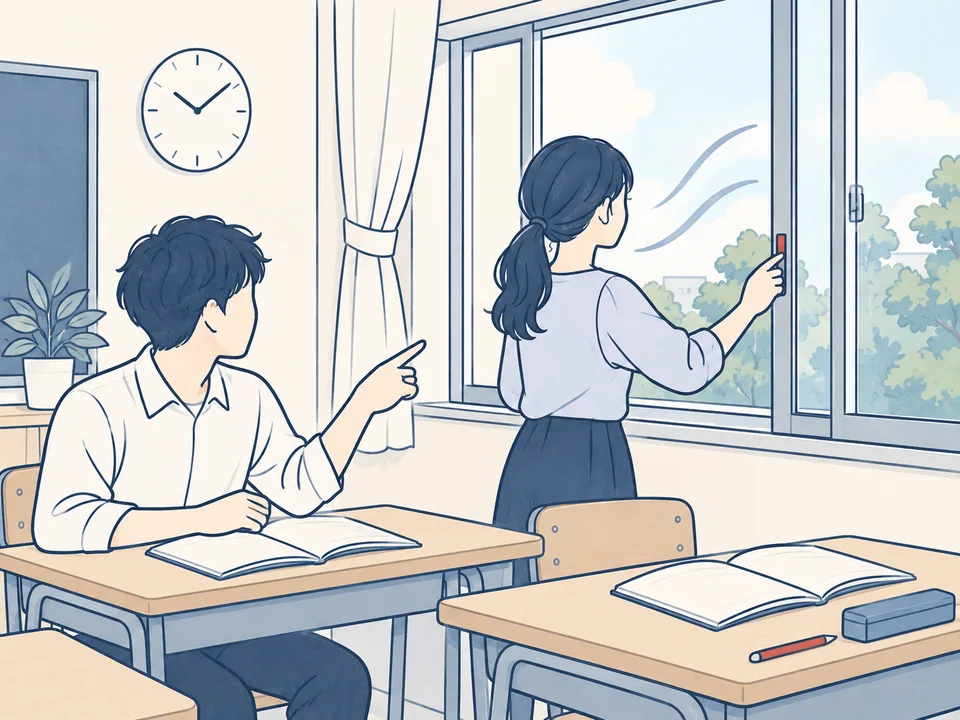
Read the text
- 1
窓を開けてください。
- 2
紙を箱に入れてください。
- 3
椅子は動かさないでください。
- 4
はい、わかりました。
Ask someone to do something
Add ください to the te-form to request an action. 開ける becomes 開けて, so say 窓を開けてください, not 開けるてください.
Verbs do not all change in the same way: 書く becomes 書いて, 読む becomes 読んで, and 待つ becomes 待って. Check both the intended action and its verb form.
Ask someone not to do something
Add でください to the nai-form. 動かす becomes 動かさない, giving 動かさないでください. 動かしてください means the opposite: please move it.
Missing ない can reverse an instruction. Identify separately what to do and what not to do.
Identify the object and destination
In 紙を箱に入れてください, 紙を identifies what to put in, and 箱に identifies its destination. Check which object goes where.
If you understand, answer はい、わかりました. If not, say もう一度お願いします to request repetition. You do not need to pretend the action is finished.
Common mistakes
Incorrect expression
窓を開けるてください。
Corrected expression
窓を開けてください。
For this group 2 verb, remove る and add て.
Incorrect expression
動かしてください。
Corrected expression
動かさないでください。
To ask someone not to move it, use ないでください.
Incorrect expression
紙を箱で入れてください。
Corrected expression
紙を箱に入れてください。
Use に for the destination into which you put something.
Try 3 questions
Practise without an account. Sign in to sync your results and review schedule.
Loading your history…
Loading your history…
History and self-check answers
The answers below are for self-study and do not record a score. Mixed practice uses topics you have practised.
Recorded questions in this set: 0
Correct on first attempt: 0